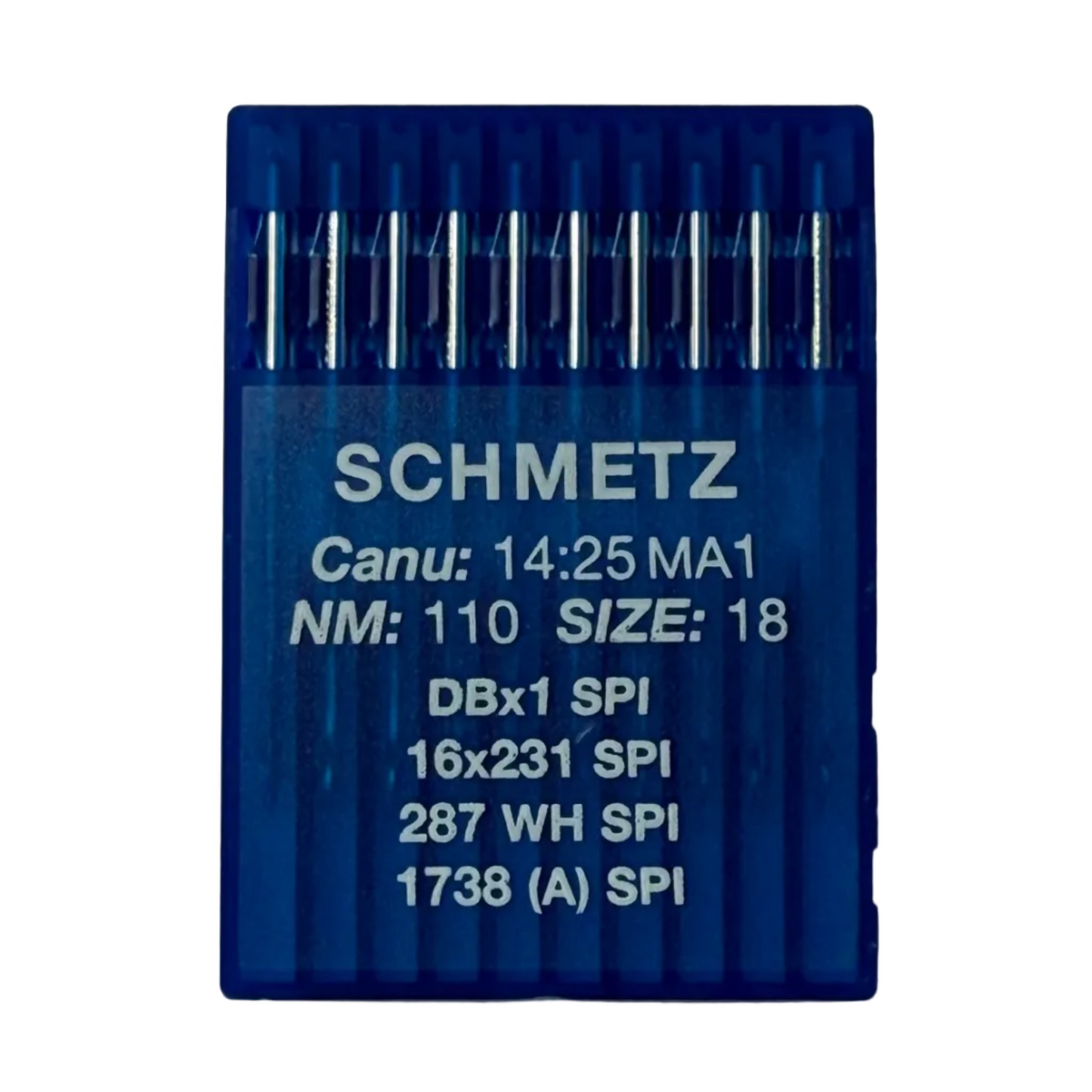
DBx1 SPI, 16x231 SPI — SCHMETZ industrial sewing machine needles for thick and thin fabrics, 10 pcs.
Quantity: 8
Couldn't load pickup availability
- Size No.: -
- Included: 10 needles
- Suitable for Machine: For industrial straight stitch sewing machines
- Application: for dense and thin fabrics
- Needle Type: SPI (Acute round point)
- Needle System: DBX1 SPI, 16X231 SPI, 287 WH SPI, 1738 (A) SPI
- Manufacturer: SCHMETZ
DBx1 SPI, 16x231 SPI are SCHMETZ industrial sewing machine needles for tightly woven, thin, and delicate fabrics. The SPI's particularly sharp, slim round point helps pierce the material precisely, reducing the risk of seam puckering and creating a neat stitch line.
SPI point characteristics
SPI (Acute Round Point) is a sharp, slim round needle point with a fine conical shape. It is designed to pierce tightly woven and certain coated fabrics precisely.
This point type helps create precise stitches and reduce puckering around the seam line. SPI is especially useful for sewing delicate, smooth, and very tightly woven materials.
Suitable materials and applications
- Very tightly woven fabrics.
- Microfiber fabrics.
- Silk and fine silk fabrics.
- Thin, smooth fabrics such as taffeta.
- Thin coated textiles.
- Precise topstitching on shirt collars and cuffs.
- Materials with uncoated elastomer threads, when the SPI point type is suitable.
Technical specifications
- Manufacturer: SCHMETZ.
- Needle system: DBx1 SPI.
- Alternative designation: 16x231 SPI.
- Needle point type: SPI — Acute Round Point.
- Point shape: sharp, slim round point.
- Application: for tightly woven, thin, and delicate fabrics.
- Package: 10 needles.
Compatibility and needle selection
Designed for industrial sewing machines whose technical documentation specifies the compatible DBx1 or 16x231 system. Before purchasing, choose an NM size suitable for the material and sewing thread.
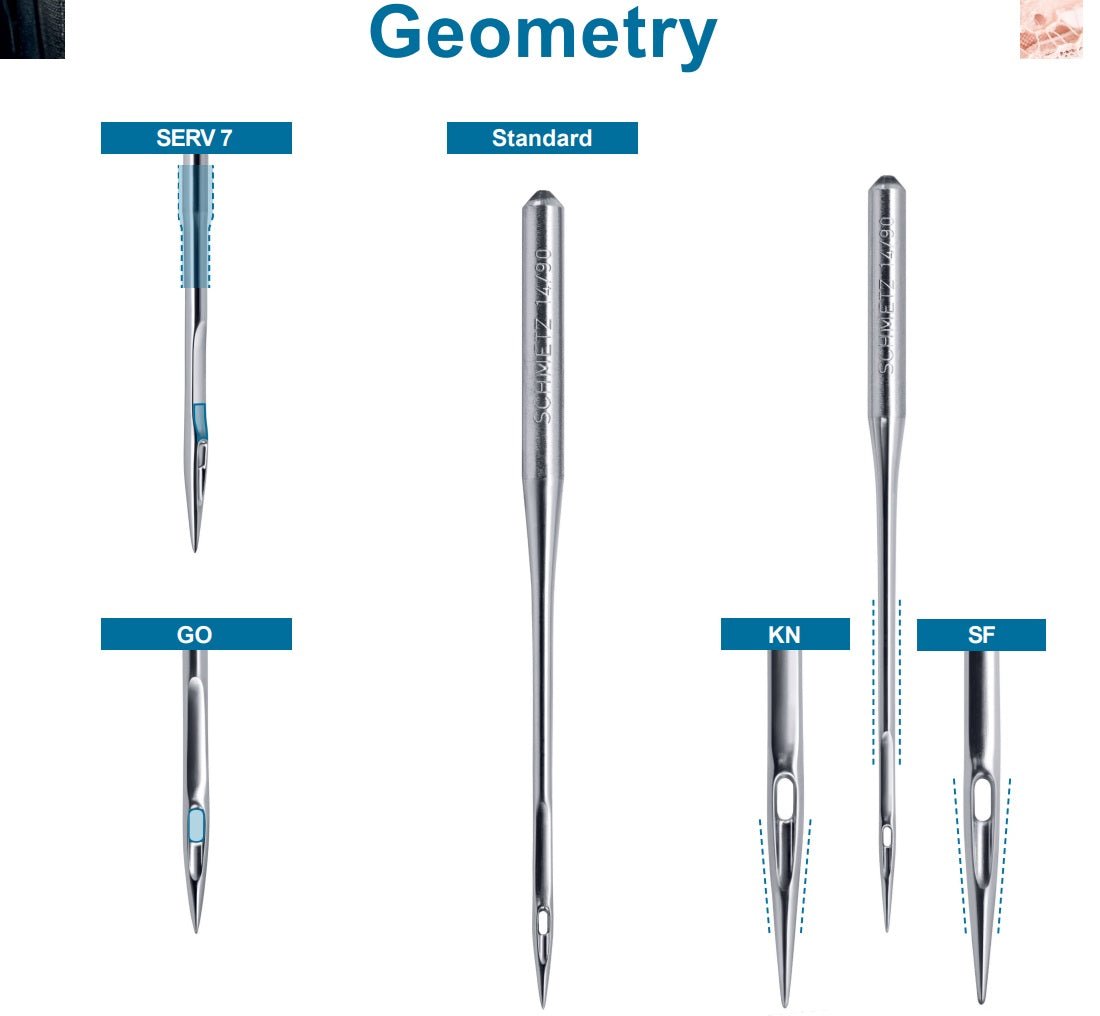
Important: The sharp SPI point is not a universal choice for all knits. SES or SUK ball points are generally more suitable for sewing knits. If greater needle stability is required during sewing, compare SPI with the SPI SERV 7 design.
Delivery
Delivery
Latvia
1–3 business days
Omniva parcel locker
3,30 EUR
Free from 70,00 EUR
DPD parcel locker
4,99 EUR
Delivery by courier
up to 3 kg
11,90 EUR
Delivery by courier
over 3 kg
15,90 EUR
You can view delivery prices to other European countries in the top menu under “Delivery”.
Product colors may vary...
The product colors may vary slightly from those shown in the image, depending on the technical color and brightness settings of your computer or device screen.

To ensure a flawless result and make small imperfections unnoticeable, choose a thread that matches the fabric.
Need help? Check out the latest blog posts
View all-
How Much Fabric Do You Need for Bedding? Fabric...
Planning to sew your own bedding? Find out how much fabric you need and use our handy calculator to work out the fabric required for sewing a sheet, duvet cover,...
How Much Fabric Do You Need for Bedding? Fabric...
Planning to sew your own bedding? Find out how much fabric you need and use our handy calculator to work out the fabric required for sewing a sheet, duvet cover,...
-
SERAFLEX Stretch Sewing Thread – Does It Really...
Did you know that you can sew stretchy fabrics on a regular sewing machine using a straight stitch? And that there are special threads that stretch with the fabric? Today...
SERAFLEX Stretch Sewing Thread – Does It Really...
Did you know that you can sew stretchy fabrics on a regular sewing machine using a straight stitch? And that there are special threads that stretch with the fabric? Today...
-
How to Choose Industrial Sewing Machine Needles?
Interactive guide to choosing needles for industrial sewing machines. Determine the machine’s needle system, the tip suited to the material, and the size.
How to Choose Industrial Sewing Machine Needles?
Interactive guide to choosing needles for industrial sewing machines. Determine the machine’s needle system, the tip suited to the material, and the size.